
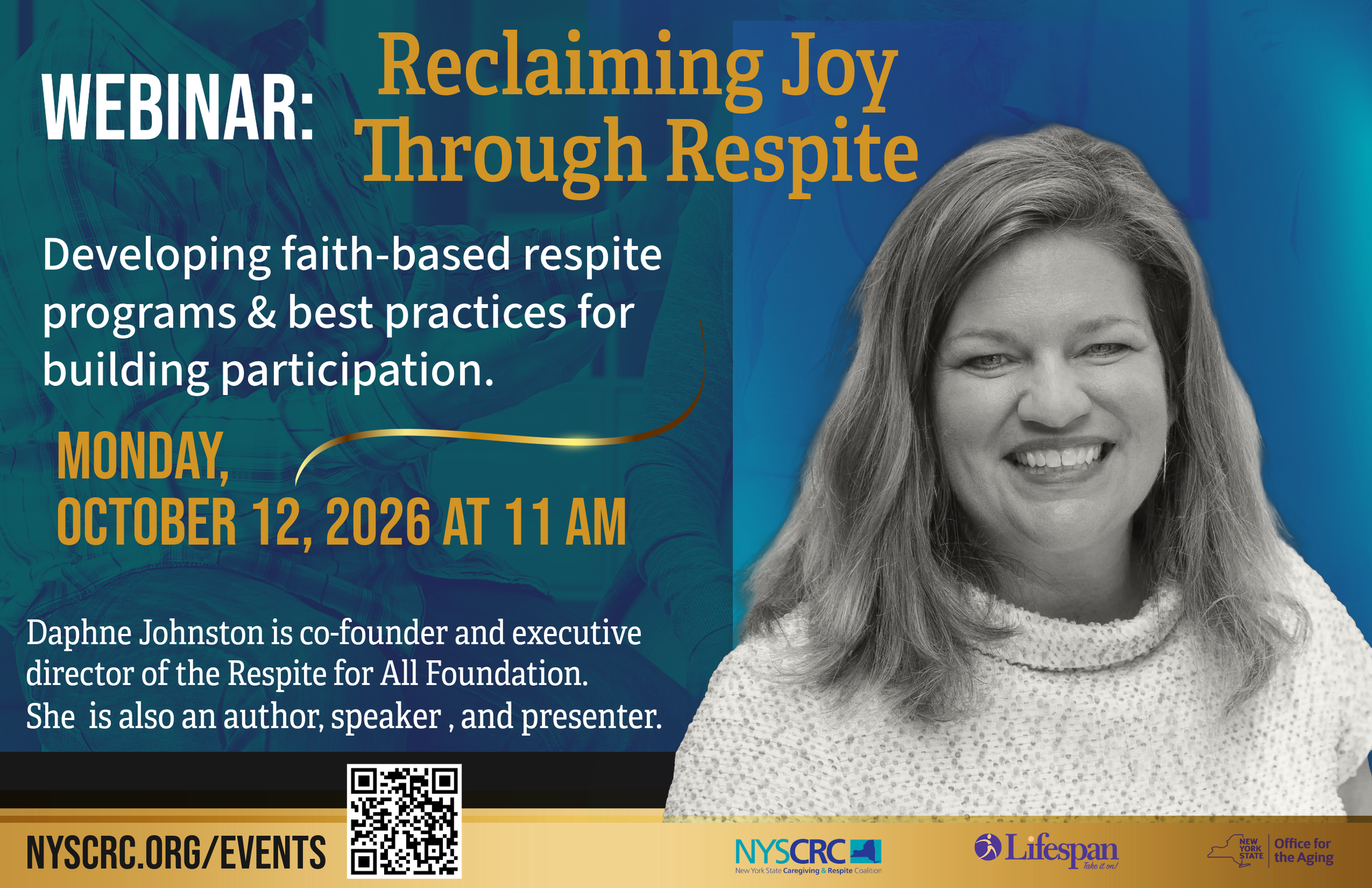
Webinar: Reclaiming Joy Through Respite
Discover how to develop a faith-based respite program and learn the best practices for building participation.

Caregiver Simulation
The Caregiver Simulation is coming to Buffalo! Dive into the trials and triumphs of informal caregiving with our engaging simulation. Gain a fresh or revitalized appreciation for the vital contributions of informal caregivers and the frameworks established to assist them.
This event is perfect for case managers, social workers, health professionals, students, employers, seasoned social service professionals, policy makers, and advocates.
Register today!

NY Connects No Wrong Door System: Linking Caregivers to Supports
This session will provide an overview of the NY Connects No Wrong Door System – New York's Aging and Disability Resource Center. NY Connects is a trusted service that provides individuals in need of long-term services and supports (LTSS) with free, objective information and assistance to access resources and programs available in their community.
NY Connects serves individuals of all ages and populations – including caregivers and has specialists who can help caregivers explore options for services and supports such as respite, support groups, and other programs in their local community. It is a great starting point for caregivers to get linked to resources that may benefit them.

Future Care Planning for People with Intellectual and Developmental Disabilities (IDD)
This presentation is designed to educate participants on two key objectives. First, audience members will gain an understanding of Future Care planning, including better awareness of planning tools and how to implement tools into a robust future care plan for individuals Aging with IDD. Second, the session will introduce Supplemental Needs Trusts, explaining their purpose and how they can be effectively utilized as planning tools to protect assets and enhance care options for individuals with special needs. By the end of the session, attendees will be better equipped to make informed decisions about care planning and trust services.